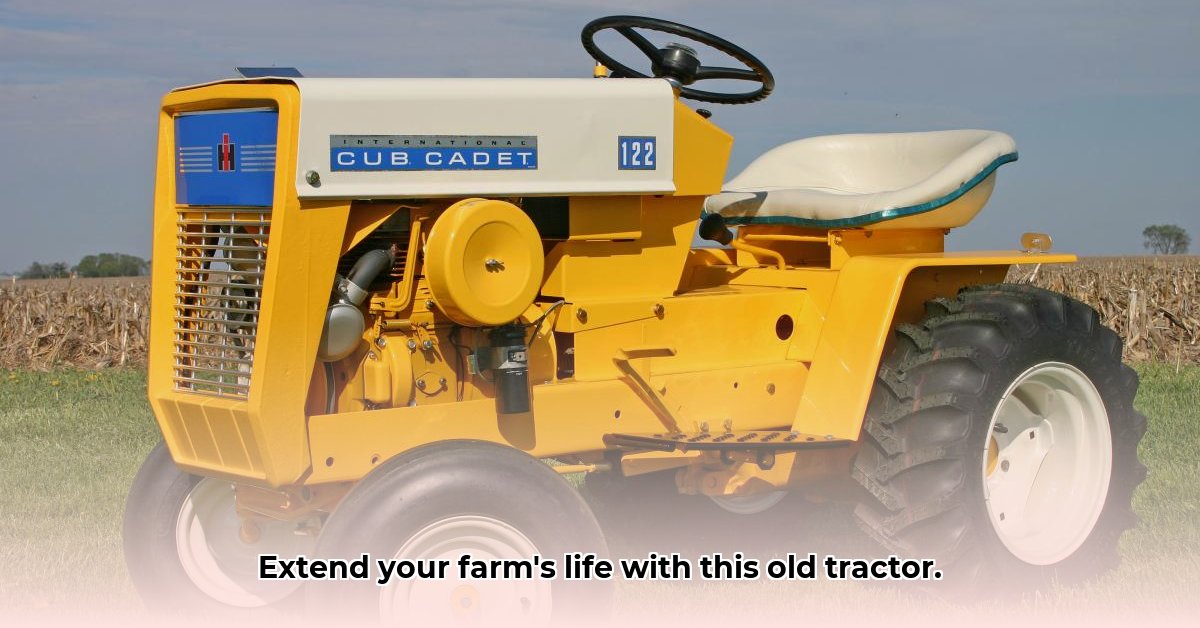
Cub Cadet's Evolution: A History of Design and Durability
The Cub Cadet's legacy is deeply intertwined with the history of small-scale farming. Initially produced under the International Harvester (IH) banner, early Cub Cadets were renowned for their robust construction and straightforward designs, prioritizing longevity and ease of repair. This "build-to-last" philosophy reflected a time when repairing agricultural equipment was commonplace, contributing significantly to sustainability. Heavy-duty components and readily available parts ensured extended operational life, minimizing waste and the environmental impact associated with frequent replacements. For more information on Cub Cadet zero turn mowers, check out this helpful resource: Cub Cadet Zero Turn Mowers.
However, the acquisition of Cub Cadet by MTD in 1981 marked a significant turning point. Subsequent design changes, manufacturing processes, and component sourcing strategies impacted the tractors' overall durability and repairability. While some improvements undoubtedly occurred, the shift towards potentially less durable parts and the closure of the Brownsville, Tennessee factory in 2009 introduced challenges for small-scale farmers seeking to maintain their older Cub Cadet tractors. This transition significantly affects the long-term sustainability of these machines. A thorough understanding of these historical changes is vital for informed decision-making. Do the newer components stand the test of time as effectively as their predecessors? This question remains a relevant area for investigation.
Sustainability Considerations for Small-Scale Farmers
This section offers actionable guidance for maximizing the sustainability of your older Cub Cadet. We will examine key areas including parts sourcing, basic maintenance and repairs, environmental impact assessment, and future considerations.
Finding and Sourcing Parts: A Practical Guide
Locating parts for older Cub Cadet models may initially seem daunting. However, a multi-pronged approach can prove highly effective. Online marketplaces such as eBay frequently list used and even new parts. Specialized Cub Cadet parts suppliers also exist, offering a dedicated resource and potentially enhanced expertise. The power of community should not be underestimated; online forums dedicated to Cub Cadet tractors are treasure troves of information, connecting owners with readily available advice, tips, and parts leads. Local scrap yards can also provide an avenue for sourcing hard-to-find components, even if they require some dedicated searching.
Performing Basic Maintenance and Repairs: Step-by-Step Instructions
Regular maintenance is paramount for maximizing the lifespan and sustainability of your Cub Cadet. Many tasks are easily manageable, reducing reliance on expensive professional services and minimizing associated environmental impacts.
1. Oil Change:
- Gather Supplies: New oil (check your owner's manual for the correct type and quantity), new oil filter, appropriate wrench for the drain plug, and a drain pan.
- Warm-Up: Allow the tractor to run briefly to warm the oil, improving its flow during draining.
- Drain Old Oil: Locate the oil drain plug (consult your owner's manual), carefully remove it, and allow the oil to drain completely into the pan.
- Replace Drain Plug: Once drainage ends, securely tighten the drain plug.
- Change Filter: Locate the oil filter, carefully unscrew it, and install the new filter, ensuring a proper seal.
- Add New Oil: Add the correct amount of new oil (refer to your owner's manual), then double-check the level using the dipstick.
2. Air Filter Replacement: Follow the same principle; the steps will be detailed similarly in your owner's manual. Remember to replace this regularly.
Beyond the Basics: More complex repairs may require advanced technical skills or access to specialized tools. YouTube channels and numerous websites provide detailed visual guides for a broader range of maintenance and repair tasks. However, prioritizing safety always remains paramount. For tasks exceeding your skill level, consult a qualified mechanic.
Assessing the Environmental Impact: A Holistic Approach
The environmental impact of your Cub Cadet extends beyond fuel consumption. Consider:
- Manufacturing: The resources and energy consumed during the tractor's initial production.
- Lifespan: A longer-lasting tractor, even with higher initial fuel consumption, reduces the overall environmental impact compared to frequent replacements.
- Disposal: Responsible disposal or recycling minimizes waste and prevents environmental contamination.
By extending the life of your tractor through diligent maintenance and repair, you lessen the environmental burden compared to continuously acquiring newer models.
Alternatives and Future Considerations
Eventually, even the most meticulously maintained tractor will reach its operational limit. When parts become excessively difficult to obtain or repairs prove prohibitively costly, alternative options such as used tractors (after careful assessment) or newer, potentially more fuel-efficient models might present themselves for consideration. Exploring sustainable alternatives, such as electric or alternative-fuel tractors, offers a glimpse into potential future-proofing options. Sustainable farm practices necessitate a continuous process of reevaluation and adaptation to maintain environmental responsibility long-term.
Conclusion: Sustainability and the Small Farm
This guide underscores the importance of considering the sustainability implications when choosing and maintaining older Cub Cadet tractors. While this analysis provides valuable insight, data limitations necessitate further research. A more comprehensive analysis would benefit from comparing various Cub Cadet models across different model years and comparing them to competitor machines in terms of lifespan, fuel efficiency, parts availability, and environmental impact. This will provide small-scale farmers with a fuller picture for informed decision-making to support sustainable farm practices.
Resources
- Online Parts Dealers: Search online for "[Cub Cadet Parts]" + your model number.
- Repair Manuals: Many online retailers offer repair manuals for older Cub Cadet models.
- Cub Cadet Online Forums: Search online for "[Cub Cadet forum]".